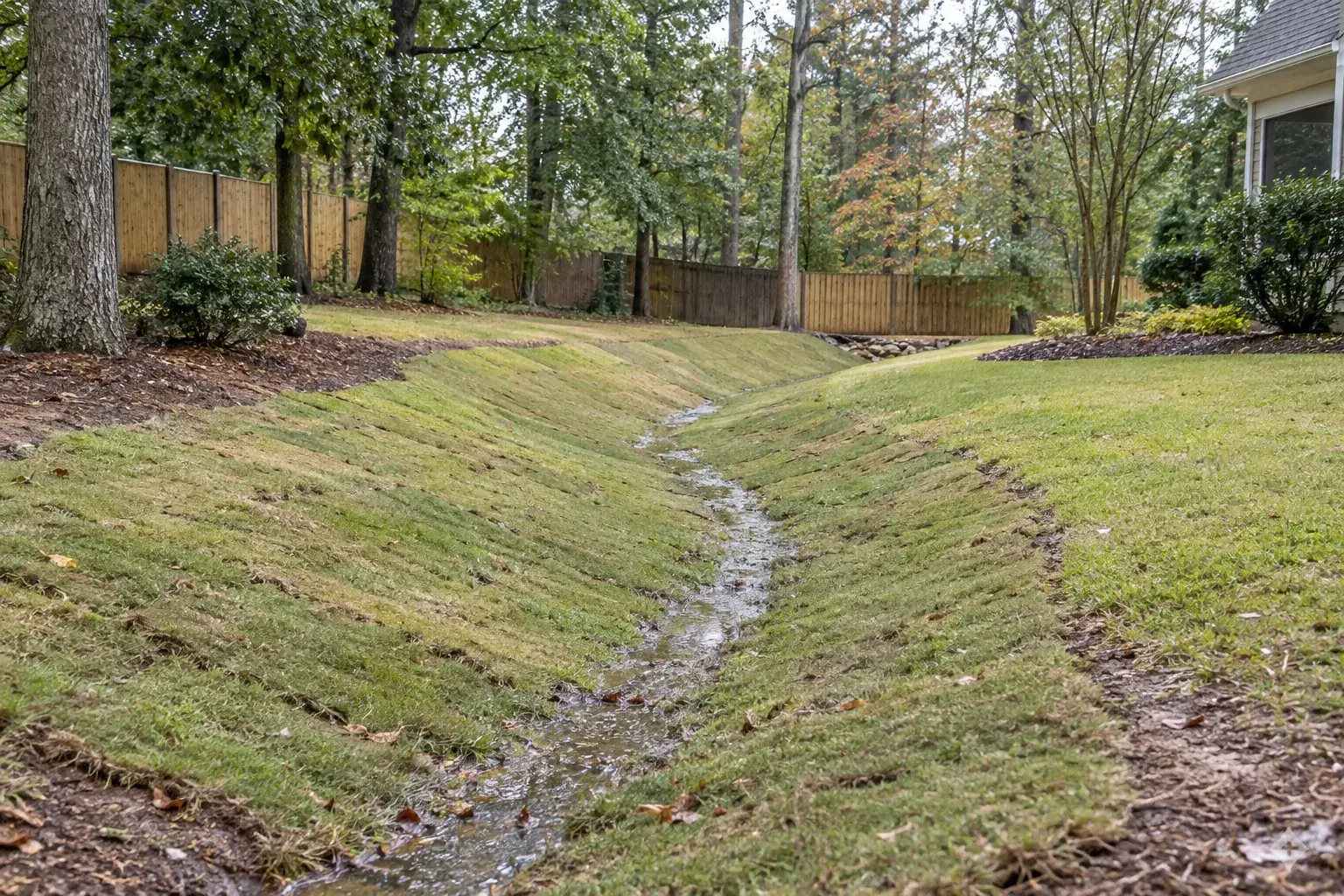
Planning this work at a Travelers Rest property
Travelers Rest properties with visible slope can allow runoff to gain speed before it reaches the wet area. Find where broad flow becomes a narrow channel and where erosion first appears. The collection point may need to begin above the damage rather than inside it.
Photograph the uphill contributing area, exposed soil and the place where water leaves or stops. Note tree roots, retaining edges, paths and vegetation that influence the route. Replacing soil alone rarely holds when the concentrated flow remains active.
The Travelers Rest proposal should explain how water will be slowed, collected or guided and how the outlet resists erosion. Include stabilization and planting or turf restoration in the comparison, along with access limits and maintenance points for any pipe or inlet.
What to document before requesting a Travelers Rest estimate
Travelers Rest properties can have runoff that gains speed across sloped ground before collecting below. The plan should slow, collect or redirect water without simply moving the problem downhill.
For a Travelers Rest estimate request, include the uphill source, visible erosion and the point where water leaves or stops on the property.
For a Travelers Rest property with sloped ground, identify where runoff begins to concentrate. Water may spread across the upper lawn and then form a narrow channel near a bed, path or change in grade. Photograph erosion and the wider uphill area before loose soil is replaced.
The plan may need to slow water, collect it or guide it along a stable surface. Simply sending it farther downhill can increase erosion or create a new wet area. Ask how the proposed route handles heavy rain, where it ends and how exposed soil or disturbed vegetation will be stabilized.
When a swale fits
Swales can suit runoff spread across a lawn when there is enough surface fall and space for a wide route. They are often considered along property edges, below higher ground or where water needs to pass around a structure. A swale is not a deep ditch; steep sides can be difficult to maintain and can increase erosion instead of solving it.
Shape, fall and capacity
The centerline, width, depth and longitudinal fall work together. A route that is too flat may pond, while a narrow or steep route can move water too quickly. The assessment should consider the contributing area and where overflow would travel during heavier rain. Existing trees, fences, beds and utilities can force changes that affect how smoothly the route functions.
What affects drainage swale cost
Length, grading volume, hand work around trees, soil removal, imported material, stabilization and turf restoration affect cost. A short accessible correction may start near the amount shown above, while a long route with erosion protection will cost more. Estimates should identify the swale limits, target shape, outlet and restoration rather than describing the work only as grading.
Drainage Swale Installation in Travelers Rest, SC questions
Is a swale the same as a ditch?
A residential swale is generally broader and shallower, shaped to carry surface water while remaining maintainable.
Can a swale be covered with grass?
Yes, when slope and expected flow allow grass to establish and resist erosion.
Will a swale hold water?
It should have a continuous route, though soil and rainfall conditions can leave temporary moisture after flow stops.
Can a swale run beside a fence?
Possibly, if there is enough width, fall, access and a suitable destination for the water.
Can a swale help with sloped-yard runoff?
A properly shaped swale can guide surface water along a broad route when the grade and outlet support it.
Does erosion control also require drainage work?
Often the water source and concentrated flow need to be managed before soil and planting repairs will hold.