Planning this work at a Travelers Rest property
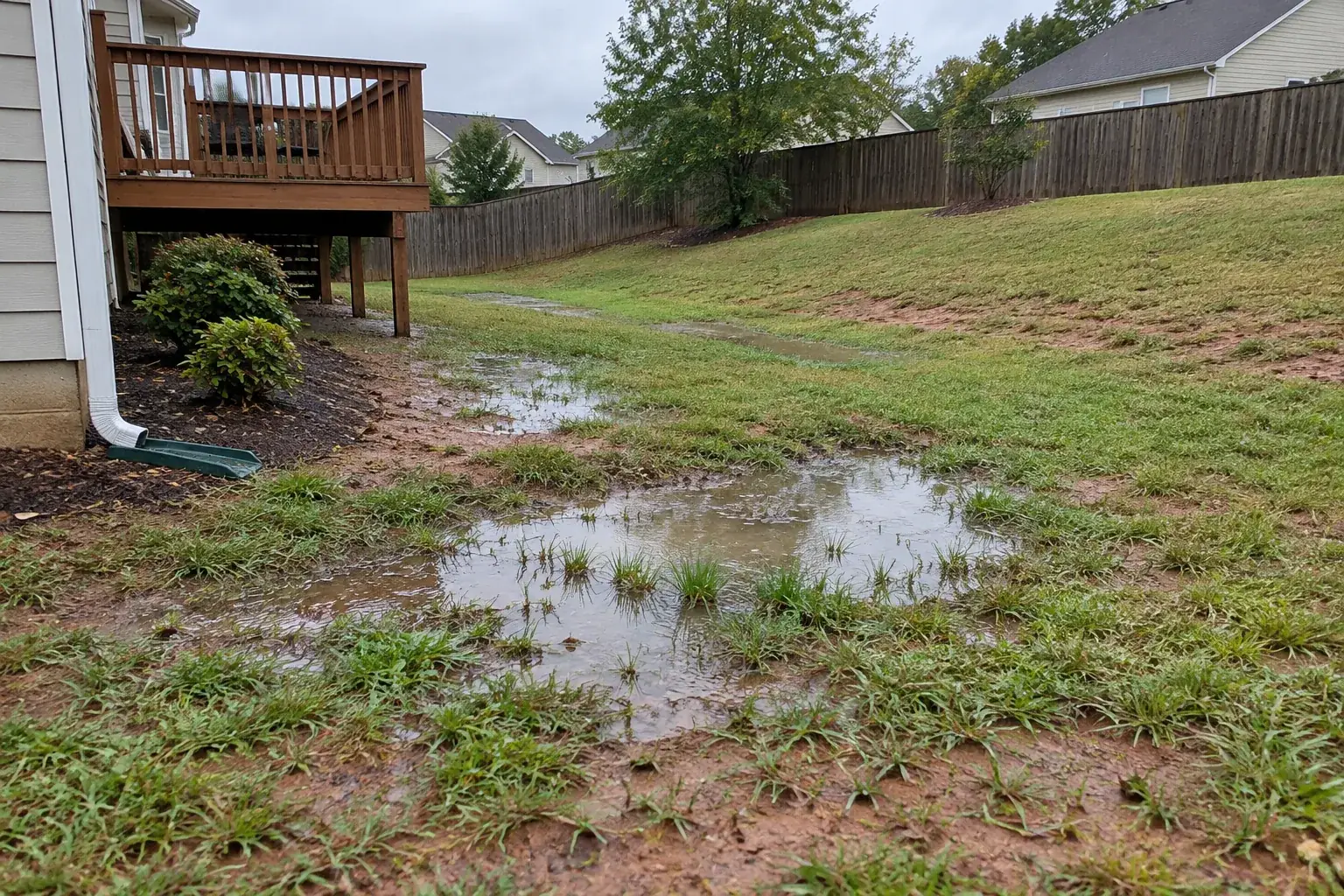
Travelers Rest properties with visible slope can allow runoff to gain speed before it reaches the wet area. Find where broad flow becomes a narrow channel and where erosion first appears. The collection point may need to begin above the damage rather than inside it.
Photograph the uphill contributing area, exposed soil and the place where water leaves or stops. Note tree roots, retaining edges, paths and vegetation that influence the route. Replacing soil alone rarely holds when the concentrated flow remains active.
The Travelers Rest proposal should explain how water will be slowed, collected or guided and how the outlet resists erosion. Include stabilization and planting or turf restoration in the comparison, along with access limits and maintenance points for any pipe or inlet.
What to document before requesting a Travelers Rest estimate
Travelers Rest properties can have runoff that gains speed across sloped ground before collecting below. The plan should slow, collect or redirect water without simply moving the problem downhill.
For a Travelers Rest estimate request, include the uphill source, visible erosion and the point where water leaves or stops on the property.
For a Travelers Rest property with sloped ground, identify where runoff begins to concentrate. Water may spread across the upper lawn and then form a narrow channel near a bed, path or change in grade. Photograph erosion and the wider uphill area before loose soil is replaced.
The plan may need to slow water, collect it or guide it along a stable surface. Simply sending it farther downhill can increase erosion or create a new wet area. Ask how the proposed route handles heavy rain, where it ends and how exposed soil or disturbed vegetation will be stabilized.
Record when the water appears
Water that forms quickly during rain may be arriving across the surface from a roof, paved area or higher ground. A strip that becomes wet slowly and remains soft can indicate subsurface movement or slow-draining soil. Take photos during rain only from a safe place, then return after several hours to record what dries first and what stays wet.
Find the source beyond the puddle
The lowest point is where water stops, not necessarily where the problem begins. Check downspouts, roof valleys, neighboring slopes, driveway edges and recent landscaping. Sediment, flattened grass and washed mulch can reveal the direction after water disappears. A proposal should connect the chosen collection method to the source rather than treating every puddle as the same condition.
What affects the cost of fixing standing water
There is no single standing-water price because the symptom can lead to different scopes. Cost depends on collection points, route length, excavation, access, outlet construction and restoration. The listed amount is a planning starting point for a straightforward drainage run. A written estimate should state the cause being addressed and what result the proposed work is designed to produce.
Standing Water Yard Service in Travelers Rest, SC questions
Does standing water always mean clay soil?
No. Soil can contribute, but low grade, concentrated runoff, a blocked route or a failed pipe may be more important.
Will a French drain remove every puddle?
Not necessarily. French drains collect water moving through soil; surface puddles may need grading or an inlet.
How long should I observe the area?
Record at least one representative rain event and how the area changes during the following hours.
Can drainage work be done without damaging the lawn?
Some disturbance is normal. The route and restoration method should be defined before work begins.
Can a swale help with sloped-yard runoff?
A properly shaped swale can guide surface water along a broad route when the grade and outlet support it.
Does erosion control also require drainage work?
Often the water source and concentrated flow need to be managed before soil and planting repairs will hold.