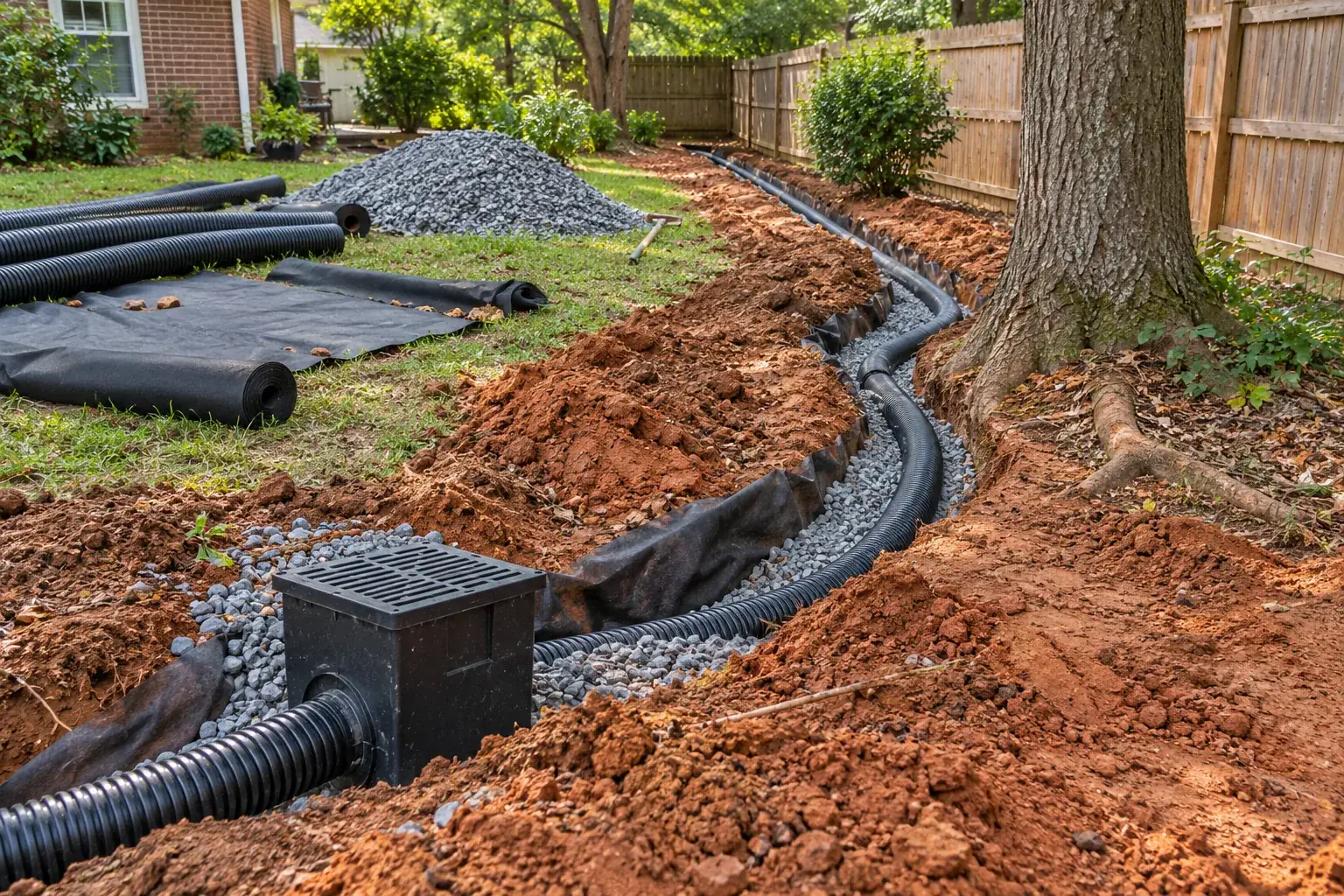
Planning this work at a Easley property
Easley properties can reveal runoff through sediment, displaced mulch, exposed soil and flattened turf even after standing water recedes. Follow those marks across lawn, driveway edges and beds to identify the source and the places where flow changes direction.
Determine whether the problem is one defined low point or several connected wet areas. A single surface inlet, broad grade correction and subsurface collection address different patterns. Note how quickly water arrives and how long the ground remains soft after rain.
An Easley scope should include route length, excavation access, outlet conditions, soil handling and restoration. Ask whether existing drains are being reused and how their condition was checked. The finished plan should not simply move the same water to another low area.
What to document before requesting a Easley estimate
Easley drainage problems can show up as soggy turf, runoff crossing a driveway or water gathering at the edge of landscaped beds. Each pattern points to a different source and route.
For an Easley estimate request, describe the first place water appears and whether it moves across the surface or rises through saturated ground.
At an Easley property, look for clues that remain after the puddle disappears: flattened grass, sediment, exposed soil, displaced mulch and damp lines along a driveway edge. These marks often make the runoff path easier to understand than a close photo of the lowest spot.
Note whether the problem is isolated or appears in several connected areas. One inlet may handle a defined surface low point, while a broad wet lawn may need grade correction, a subsurface route or control of uphill runoff. Access, pipe length and restoration should be included when comparing estimates.
Easley drainage starting prices
Current site planning ranges begin around $800 for straightforward downspout drainage or a short swale, $1,000 for a simple catch basin, grading or erosion-control scope, $1,500 for a basic yard-drainage run or French drain, and $2,000 for driveway drainage. These are starting points, not offers or guaranteed totals, and larger projects can cost substantially more.
Collection method changes the materials
A surface low point may need a basin, fittings and solid pipe. Subsurface water may need fabric, washed stone and perforated pipe. Roof water should usually stay in solid pipe. Grading uses equipment, soil handling and turf restoration rather than the same material list. Comparing only pipe prices misses the labor and site work that determine most residential scopes.
Restoration and maintenance
Backfilling alone does not return a yard to normal use. Sod, seed, mulch, gravel, concrete repair and disposal may be included or excluded. Cleanouts, removable grates and accessible outlets can reduce future maintenance difficulty. Ask for the restoration area, material and responsibility in writing so the final appearance and price are not left to assumption.
Yard Drainage Cost in Easley, SC questions
How much does a French drain cost in Easley?
A basic planning figure starts around $1,500; length, depth, access, stone, outlet and restoration determine the final total.
What is the least expensive drainage option?
The right comparison depends on the cause. A short downspout route may cost less than broad grading, but it will not solve an unrelated wet-soil problem.
Why do drainage estimates vary so much?
Proposals may use different routes, materials, outlets and restoration assumptions. Compare line items and intended results.
Can I get a price from photos?
Photos help identify questions, but measurements and outlet conditions are normally needed for a dependable project scope.
What is the difference between grading and a drain?
Grading reshapes the surface path. A drain collects and carries water through pipe or stone.
How long should water remain after rain?
Conditions vary, but recurring standing water after surrounding areas dry is a reason to assess the source, grade and outlet.