Planning this work at a Anderson property
Anderson yards can show water problems where lawn, planting beds and hard surfaces meet. These edges often redirect runoff or hold it above surrounding soil. Identify whether the water comes from the surface, a roof connection or ground that stays saturated after nearby areas dry.
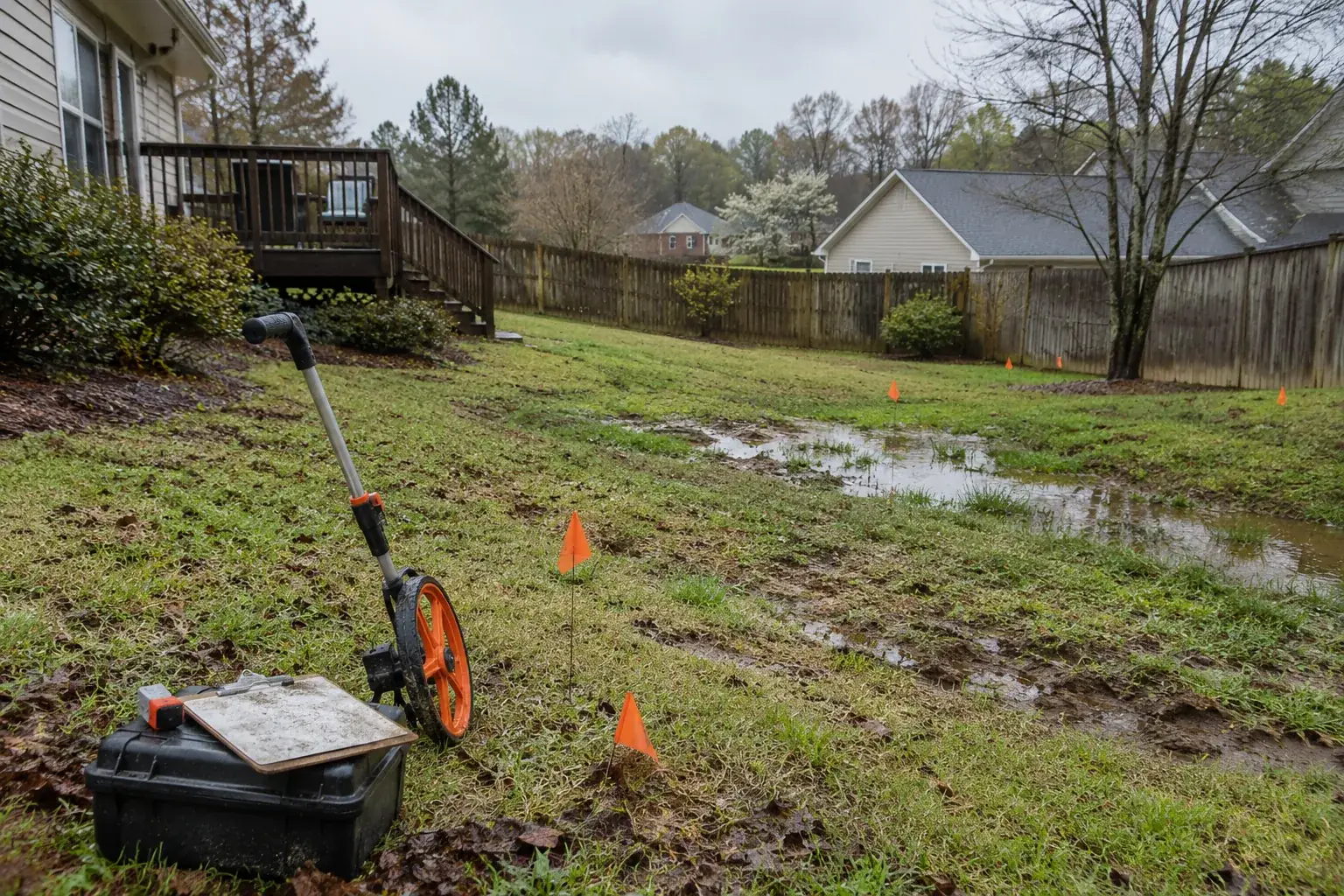
Take wide photographs from both directions and include the slope beyond the puddle. A close image of water does not reveal where it began. Note erosion, deposited soil and the time required for the area to become usable after rain.
Before work is priced, confirm how the proposed route crosses roots, fences, walkways and existing landscaping. The Anderson estimate should describe excavation, soil handling, outlet construction and the exact restoration area so a low price does not omit necessary finishing work.
What to document before requesting a Anderson estimate
Anderson homeowners may see water gather where lawns, beds and hard surfaces meet. The visible puddle may be downstream from the actual source.
For an Anderson property, include photos of the wider slope and nearby downspouts, not only a close-up of standing water.
At an Anderson property, begin at the edges between lawn, planting beds, patios and driveways. These transitions can reveal where runoff changes direction or becomes trapped. Note whether mulch washes, turf thins or sediment collects, because those signs show the path even when the yard is dry.
Avoid adding soil to a low spot until the next destination for the water is clear. Raising one area can move runoff toward another part of the yard or a nearby structure. Record the available fall, obstacles and possible outlet so grading and drainage options can be compared together. Include any existing drain covers or pipe outlets in the property photos.
Prepare the property history
Write down when the problem began, whether it follows every rain and what has changed nearby. New gutters, patios, landscaping, fences and work on neighboring ground can alter the route. Note any existing drain, outlet or buried pipe and whether it ever worked. This background helps an assessment focus on causes instead of pricing a requested product without context.
Take useful photos
A close photo of a puddle proves that water is present but rarely shows why. Include one view looking uphill, one looking toward the lowest point and images of nearby downspouts, pavement and visible outlets. If safe, photograph the pattern during rain and again several hours later. Do not enter flowing water, climb during a storm or open utility structures.
Starting prices and final pricing
Simple drainage work on this site begins around the lowest service starting prices, while French drains, long pipe routes, driveway work and broad grading typically begin higher. Those figures are planning guides, not quotes. Final pricing follows measurements and site conditions. Use the estimate request to describe the property, then review the written scope before authorizing work.
Yard Drainage Estimate in Anderson, SC questions
Is a drainage estimate based only on linear feet?
No. Depth, access, collection points, outlet work and restoration can be as important as length.
Should I request a French drain specifically?
Describe the water problem first. The assessment should determine whether a French drain matches how water moves on the property.
What photos should I send?
Send wide views of the wet area, uphill source, nearby downspouts or paving and the likely outlet direction.
Does an estimate guarantee the final price?
The written terms should explain pricing, assumptions and how unforeseen conditions or scope changes are handled.
Do I need grading or a drain?
Grading changes the surface path; a drain collects water. Measurements on the property determine which fits.
Can a low spot simply be filled?
Only after checking where water will move next.