Planning this work at a Taylors property
Taylors drainage planning begins by tracing water from the highest visible source to the final low point. Roof valleys, sloped lawn, paved edges and neighboring runoff may combine before the problem becomes visible beside the house or across the yard.
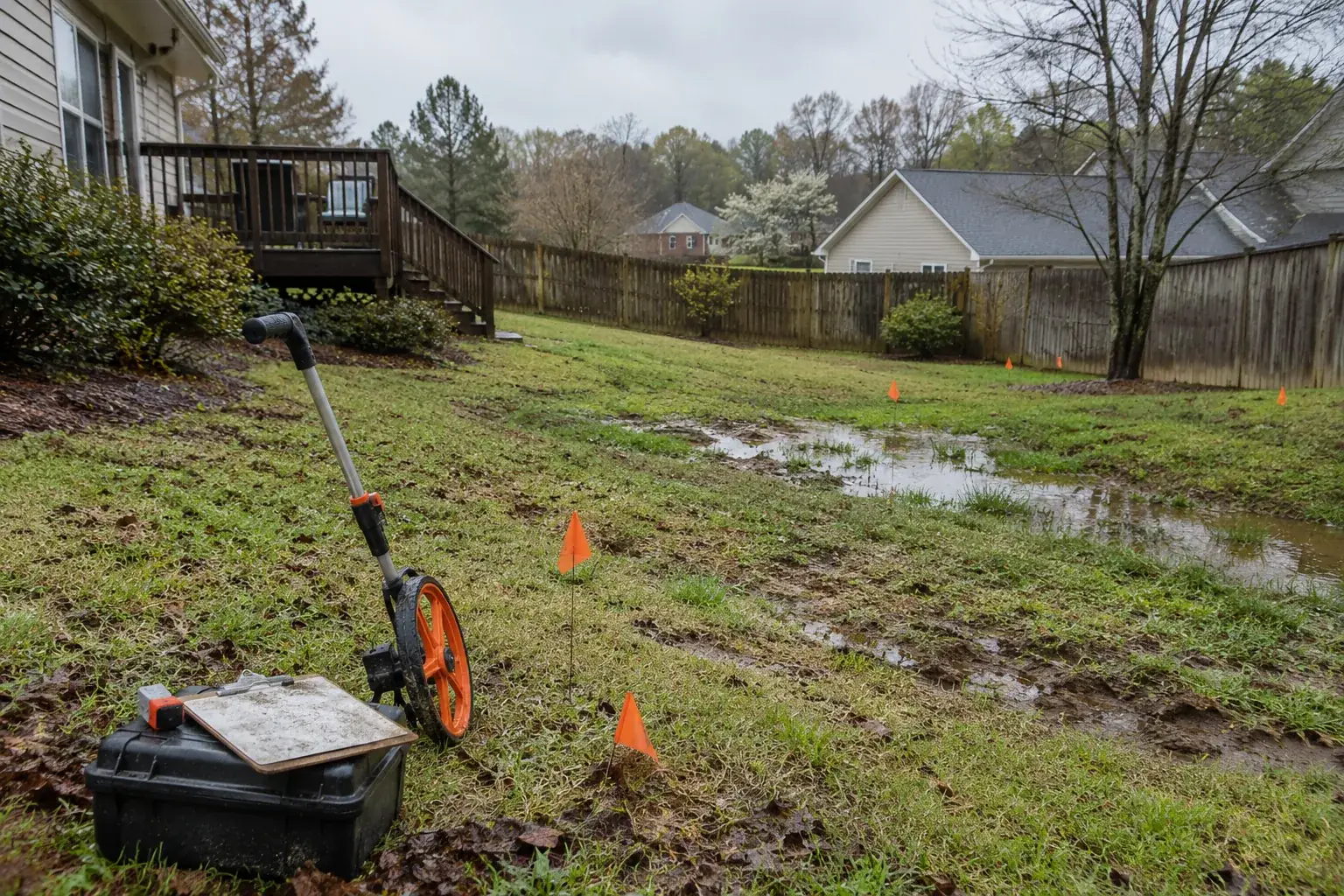
Check the area during rainfall and several hours later. Moving surface water and lingering saturated soil are different observations. Photographs should include the surrounding grade, downspouts, hard surfaces and any outlet rather than showing only a close view of the puddle.
The Taylors proposal should explain why the route and outlet were selected, how obstacles affect excavation and what restoration is included. If several systems are recommended, each component should have a clear collection job and connect logically to the next part.
What to document before requesting a Taylors estimate
Taylors properties may have runoff moving across lawns, collecting along foundations or settling in low areas between homes. A useful plan follows that water across the whole lot.
For a Taylors property, show the wider slope, where roof water exits and the lowest point that remains wet after rain.
For a Taylors yard, trace the water from the highest visible point to the place where it stops. Include roof valleys, downspouts, sloped lawn sections and any paved edge that may concentrate flow. The shortest route is not always the route with enough fall or a suitable outlet.
Check the wet area again several hours after rain. Fast-moving surface water and lingering saturated soil are different observations and may need different components. A written drainage plan should identify which water is being collected, how it travels across the property and where it can discharge without creating another problem.
Prepare the property history
Write down when the problem began, whether it follows every rain and what has changed nearby. New gutters, patios, landscaping, fences and work on neighboring ground can alter the route. Note any existing drain, outlet or buried pipe and whether it ever worked. This background helps an assessment focus on causes instead of pricing a requested product without context.
Take useful photos
A close photo of a puddle proves that water is present but rarely shows why. Include one view looking uphill, one looking toward the lowest point and images of nearby downspouts, pavement and visible outlets. If safe, photograph the pattern during rain and again several hours later. Do not enter flowing water, climb during a storm or open utility structures.
Starting prices and final pricing
Simple drainage work on this site begins around the lowest service starting prices, while French drains, long pipe routes, driveway work and broad grading typically begin higher. Those figures are planning guides, not quotes. Final pricing follows measurements and site conditions. Use the estimate request to describe the property, then review the written scope before authorizing work.
Yard Drainage Estimate in Taylors, SC questions
Is a drainage estimate based only on linear feet?
No. Depth, access, collection points, outlet work and restoration can be as important as length.
Should I request a French drain specifically?
Describe the water problem first. The assessment should determine whether a French drain matches how water moves on the property.
What photos should I send?
Send wide views of the wet area, uphill source, nearby downspouts or paving and the likely outlet direction.
Does an estimate guarantee the final price?
The written terms should explain pricing, assumptions and how unforeseen conditions or scope changes are handled.
Can downspouts cause yard drainage problems?
Yes. Concentrated roof water can overwhelm a small area when it discharges beside the house or onto a flat lawn.
How is a drainage outlet selected?
The outlet must fit the property grade, expected flow and any applicable property or local requirements.