Planning this work at a Greenville property
Greenville properties can place roofs, driveways, patios and sloped lawns close together, so several runoff sources may feed the same low area. The assessment should separate each source before deciding which part belongs in a pipe, surface inlet, swale or grading plan.
Photographs are most useful when they show the wet area in relation to the house and the higher side of the lot. Include downspouts, hard surfaces, fences and the direction water takes during rain. Return after the storm to record which areas drain and which remain soft.
Access can change the installation method. Narrow side gates, mature roots, utility routes and finished landscaping may require more hand work or a different alignment. The written scope should identify the collection point, full route, outlet and restoration limits for the Greenville property.
What to document before requesting a Greenville estimate
Greenville properties can combine roof runoff, sloped lawns, paved areas and low side yards. The drainage plan should show how those sources connect before choosing a drain.
For a Greenville estimate request, note the property ZIP code, the wet area and whether runoff comes from a roof, higher ground or paving.
Before choosing a Greenville drainage system, watch one full rain event from a safe location. Note whether water falls directly into the wet area, arrives from a downspout, crosses a driveway or enters from higher ground. Mark the first wet point and the final low point because they may be different.
Measure how long the area remains wet after rain stops. Also note fences, walkways, roots, utilities and narrow side access that could affect the route. These observations help compare grading, a surface inlet, a solid pipe or a subsurface drain on the same property conditions.
When a catch basin fits the problem
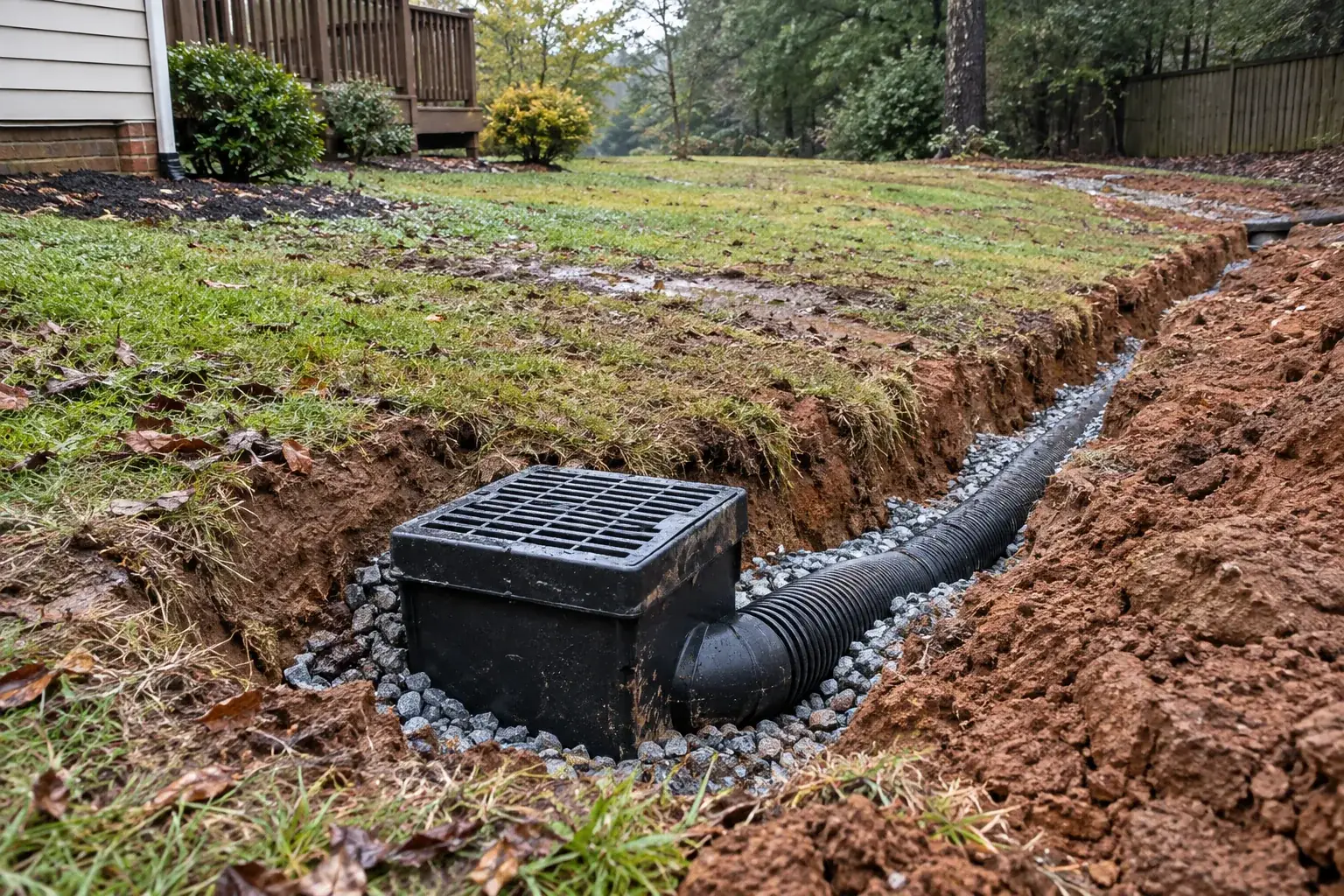
Catch basins are designed for water moving across the surface. They can fit a visible low point where runoff gathers during rain, the edge of a patio, a lawn depression or an area below a downspout route. They are less useful when the whole soil profile remains saturated without a clear surface collection point. Watching the yard during rain helps separate those conditions.
Placement matters more than basin size
The grate needs to sit at the true collection elevation. A basin installed slightly above the surrounding soil will leave water behind, while one placed without enough incoming grade may collect only a small part of the flow. The assessment should measure the low point, the approach grade and the elevation available for the outlet before excavation begins.
Pipe route and outlet
Water leaves the basin through solid pipe. The route must maintain workable fall, avoid utilities and roots, and reach a discharge point that will not send the same water toward a structure or neighboring lot. Long routes, tight gates, hard surfaces and outlet construction can add more cost than the basin itself. Cleanout and maintenance access should also be identified.
Installation and restoration
A typical project marks utilities, lays out the route, excavates the basin and pipe trench, establishes the elevations, connects the fittings and tests the path before backfilling. Soil is compacted in stages and disturbed lawn, mulch or stone is restored according to the written scope. The grate should remain accessible after the surrounding surface is finished.
What affects catch basin cost in Greenville
A straightforward installation may start near the price shown above, but basin size is only one factor. Pipe length, trench depth, roots, rock, narrow access, multiple inlets, connection fittings and the final outlet change the total. Compare estimates by the complete collection route rather than by the price of a plastic box alone.
What a useful written scope should include
The proposal should identify the water being addressed, collection point, pipe or surface route, outlet, excavation limits, materials, cleanup and restoration. It should also state important exclusions and how a change in site conditions would be handled. This makes estimates easier to compare and gives the finished system a defined job.
Ask how the route was selected, what will remain visible, which surfaces will be disturbed and how the system can be checked after future storms. If several components are proposed, each one should have a clear purpose and connect logically to the next part of the route.
Before work begins, confirm applicable utility locating, property restrictions and outlet requirements. Keep photographs and the final scope with the property records, and leave grates, cleanouts and outlets accessible for inspection.
Catch Basin Installation in Greenville, SC questions
Will one catch basin drain the whole yard?
Only if the surrounding grade sends the relevant surface water to that point and the pipe and outlet can handle the expected flow.
Can a catch basin connect to a downspout pipe?
It can be part of a combined plan, but flow capacity, fittings and maintenance access need to be considered together.
Does the grate stay visible?
Yes. The grate must remain open and accessible so water can enter and debris can be removed.
Can the basin discharge at the curb?
That depends on the property and applicable requirements. The outlet should be confirmed before the route is installed.
What drainage services are available in Greenville?
The site covers yard drainage, French drains, catch basins, downspout routes, grading, swales, driveway drainage and erosion control.
Is clay soil the cause?
Some Upstate properties have clay-heavy soil, but conditions vary by lot. Soil is one factor alongside slope, runoff and the outlet.