Planning this work at a Greenville property
Greenville properties can place roofs, driveways, patios and sloped lawns close together, so several runoff sources may feed the same low area. The assessment should separate each source before deciding which part belongs in a pipe, surface inlet, swale or grading plan.
Photographs are most useful when they show the wet area in relation to the house and the higher side of the lot. Include downspouts, hard surfaces, fences and the direction water takes during rain. Return after the storm to record which areas drain and which remain soft.
Access can change the installation method. Narrow side gates, mature roots, utility routes and finished landscaping may require more hand work or a different alignment. The written scope should identify the collection point, full route, outlet and restoration limits for the Greenville property.
What to document before requesting a Greenville estimate
Greenville properties can combine roof runoff, sloped lawns, paved areas and low side yards. The drainage plan should show how those sources connect before choosing a drain.
For a Greenville estimate request, note the property ZIP code, the wet area and whether runoff comes from a roof, higher ground or paving.
Before choosing a Greenville drainage system, watch one full rain event from a safe location. Note whether water falls directly into the wet area, arrives from a downspout, crosses a driveway or enters from higher ground. Mark the first wet point and the final low point because they may be different.
Measure how long the area remains wet after rain stops. Also note fences, walkways, roots, utilities and narrow side access that could affect the route. These observations help compare grading, a surface inlet, a solid pipe or a subsurface drain on the same property conditions.
Trace water before cutting concrete
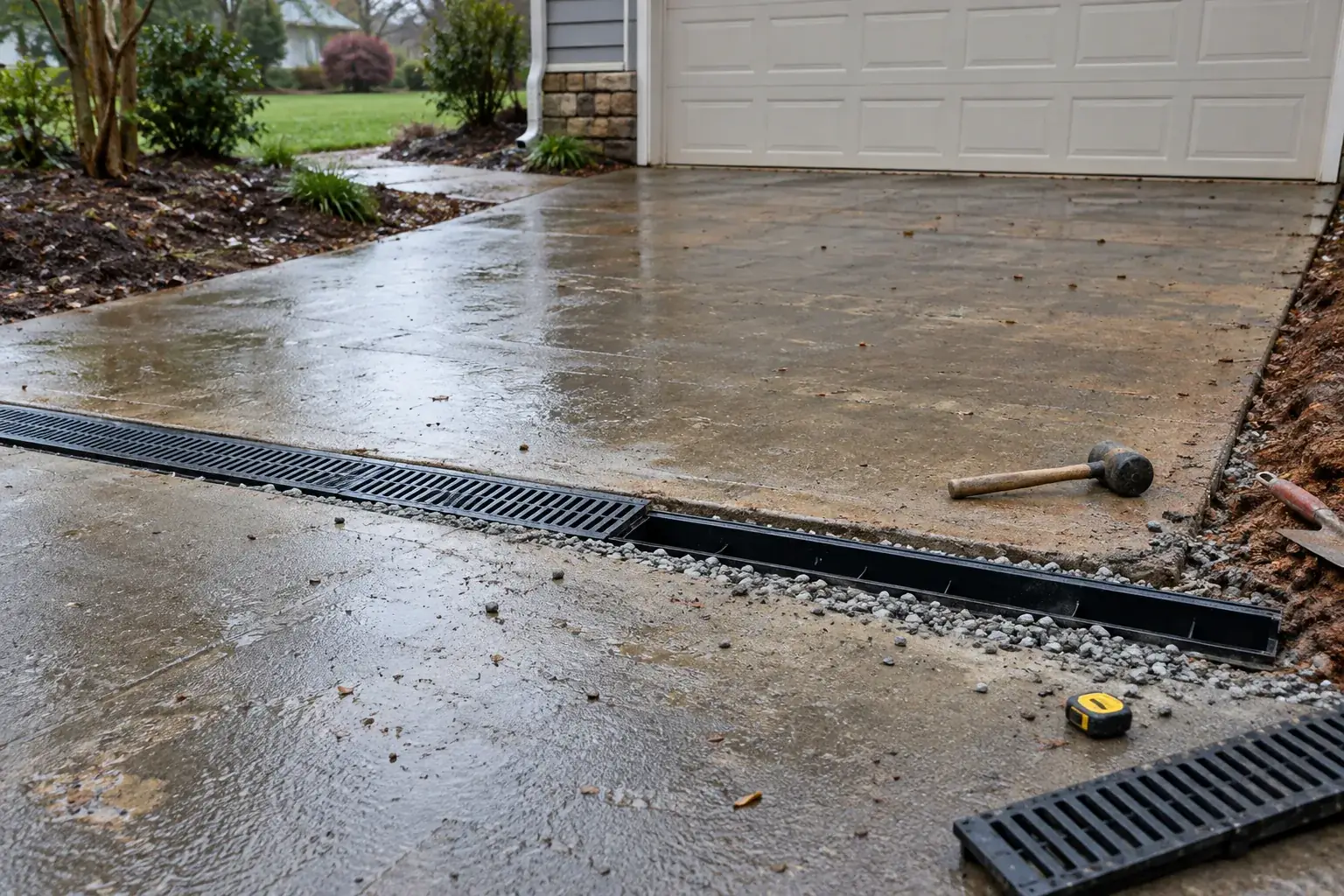
A channel drain can intercept water crossing a driveway, but it should not be selected before the upstream source is understood. Runoff may arrive from the street, an uphill lawn, roof discharge or the driveway surface itself. Redirecting some water before it reaches the pavement can reduce the required drain size and simplify the outlet route.
Channel drains and point inlets solve different patterns
A linear channel drain collects water along an edge or across a broad paved path. A catch basin handles flow that gathers at a defined low point. Some driveways need both collection and grade correction. The proposed grate, channel strength and placement should match vehicle loading and sit at an elevation that actually receives the flow.
Concrete and outlet work drive the scope
Installing a drain across existing concrete can require saw cutting, removal, excavation, bedding and new concrete around the channel. The outlet pipe then needs a route beyond the driveway. Existing cracks, reinforcement, decorative finishes, walls and limited access can change the work. The written scope should separate drainage components from demolition and restoration.
Protect the garage without creating an edge problem
A drain near a garage threshold needs reliable collection and regular cleaning, but the plan should also check driveway edges. Water that bypasses the grate may erode planting beds or collect beside the slab. Test the finished elevations across the entire width and confirm that overflow has a predictable path during heavier rain.
What affects driveway drainage cost
Driveway systems often start higher than simple lawn drainage because hard-surface work is involved. Channel length, grate load rating, concrete thickness, outlet distance, pipe depth and matching the repaired finish all affect cost. An estimate should state the drain dimensions, outlet route, concrete limits and whether disposal and final cleanup are included.
What a useful written scope should include
The proposal should identify the water being addressed, collection point, pipe or surface route, outlet, excavation limits, materials, cleanup and restoration. It should also state important exclusions and how a change in site conditions would be handled. This makes estimates easier to compare and gives the finished system a defined job.
Ask how the route was selected, what will remain visible, which surfaces will be disturbed and how the system can be checked after future storms. If several components are proposed, each one should have a clear purpose and connect logically to the next part of the route.
Before work begins, confirm applicable utility locating, property restrictions and outlet requirements. Keep photographs and the final scope with the property records, and leave grates, cleanouts and outlets accessible for inspection.
Driveway Drainage Contractor in Greenville, SC questions
Will a channel drain stop water from entering my garage?
It can intercept correctly directed surface flow, but capacity, placement, driveway grade and the outlet all have to work together.
Can a drain be added without replacing the driveway?
Often a narrow section can be cut and restored, depending on the concrete condition and required route.
What kind of grate is used?
The grate should match the location and expected vehicle loading, and it should be removable for cleaning.
Why is my driveway drain overflowing?
Debris, a blocked outlet, poor slope or more incoming water than the system can carry are common causes.
What drainage services are available in Greenville?
The site covers yard drainage, French drains, catch basins, downspout routes, grading, swales, driveway drainage and erosion control.
Is clay soil the cause?
Some Upstate properties have clay-heavy soil, but conditions vary by lot. Soil is one factor alongside slope, runoff and the outlet.