Planning this work at a Spartanburg property
Spartanburg drainage planning should distinguish water that crosses the surface during a storm from soil that remains wet later. Those conditions can occur together but do not always use the same collection method. Watch the first place water appears and the lowest point where it stops.
Include roof discharge, driveways, walkways and changes in lawn elevation when documenting the property. Sediment at an edge, flattened grass or washed mulch can preserve the runoff path after standing water disappears and help explain where a route should begin.
A Spartanburg scope should state whether existing drains will remain, where new components connect and how the outlet was selected. Note gates, tree roots, utilities and surfaces that require restoration so estimates include the same practical work rather than only the visible drain component.
What to document before requesting a Spartanburg estimate
In Spartanburg, a useful drainage assessment starts with the route across the individual property: roof discharge, lawn grades, driveways and the lowest point.
Describe whether the Spartanburg property floods during rain or stays wet afterward. That timing helps distinguish surface flow from slow drainage through soil.
For a Spartanburg yard, separate fast storm runoff from ground that drains slowly afterward. Water that races across the surface needs a clear surface route or collection point. Soil that stays saturated may require a different approach, and both conditions can occur in the same yard.
Photograph the area from uphill and downhill, then include nearby roofs, paved surfaces and existing drain openings. Check whether an old outlet is buried, blocked or lower than the surrounding ground. A useful proposal should explain the collection point, pipe or swale route, discharge point and surface restoration.
When a catch basin fits the problem
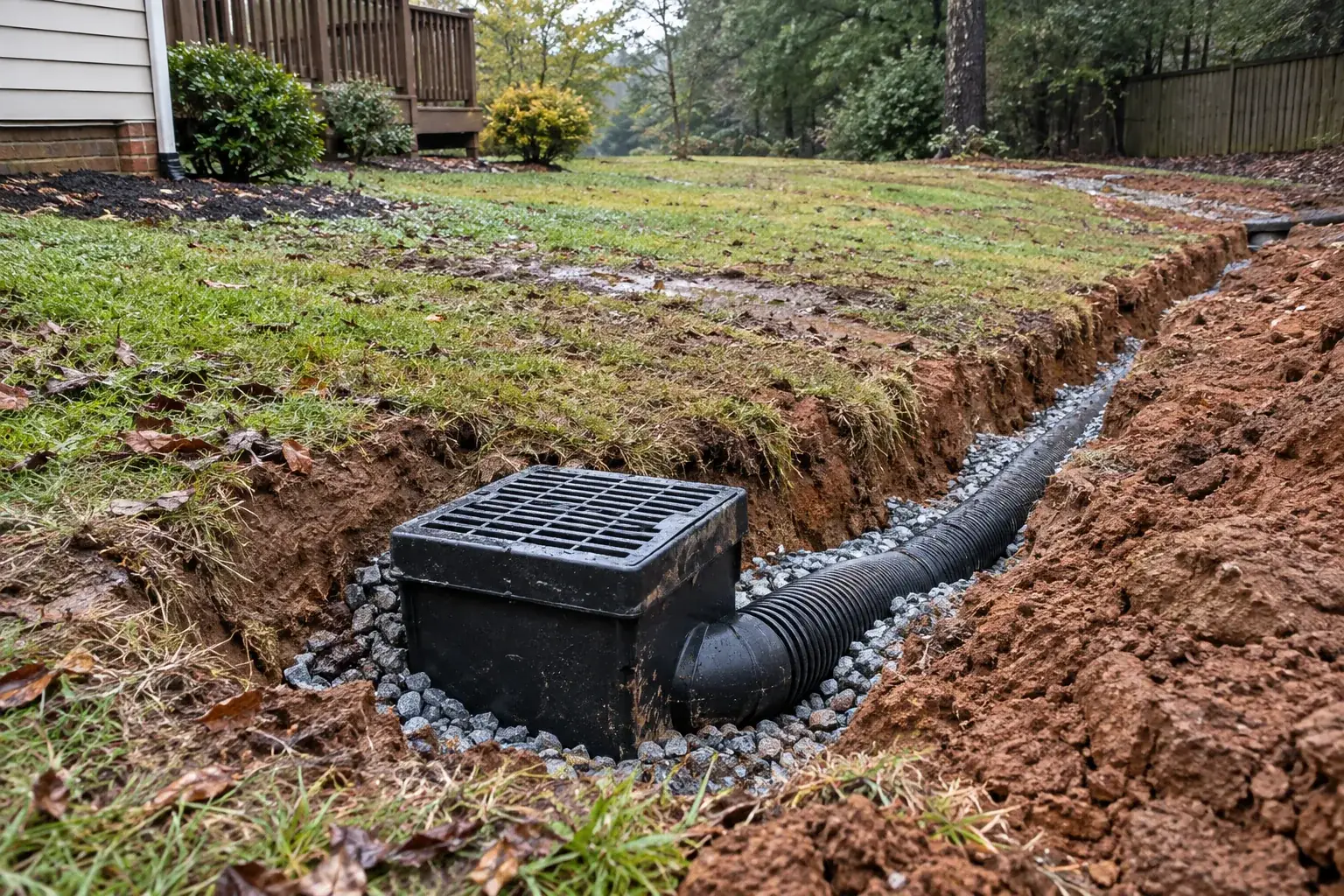
Catch basins are designed for water moving across the surface. They can fit a visible low point where runoff gathers during rain, the edge of a patio, a lawn depression or an area below a downspout route. They are less useful when the whole soil profile remains saturated without a clear surface collection point. Watching the yard during rain helps separate those conditions.
Placement matters more than basin size
The grate needs to sit at the true collection elevation. A basin installed slightly above the surrounding soil will leave water behind, while one placed without enough incoming grade may collect only a small part of the flow. The assessment should measure the low point, the approach grade and the elevation available for the outlet before excavation begins.
What affects catch basin cost in Spartanburg
A straightforward installation may start near the price shown above, but basin size is only one factor. Pipe length, trench depth, roots, rock, narrow access, multiple inlets, connection fittings and the final outlet change the total. Compare estimates by the complete collection route rather than by the price of a plastic box alone.
Catch Basin Installation in Spartanburg, SC questions
Will one catch basin drain the whole yard?
Only if the surrounding grade sends the relevant surface water to that point and the pipe and outlet can handle the expected flow.
Can a catch basin connect to a downspout pipe?
It can be part of a combined plan, but flow capacity, fittings and maintenance access need to be considered together.
Does the grate stay visible?
Yes. The grate must remain open and accessible so water can enter and debris can be removed.
Can the basin discharge at the curb?
That depends on the property and applicable requirements. The outlet should be confirmed before the route is installed.
Can one drain handle roof and yard water?
Possibly, but combined flow, pipe capacity and outlet conditions need to be designed together.
What should a quote include?
It should identify the collection method, route, outlet, restoration and maintenance access.