Planning this work at a Spartanburg property
Spartanburg drainage planning should distinguish water that crosses the surface during a storm from soil that remains wet later. Those conditions can occur together but do not always use the same collection method. Watch the first place water appears and the lowest point where it stops.
Include roof discharge, driveways, walkways and changes in lawn elevation when documenting the property. Sediment at an edge, flattened grass or washed mulch can preserve the runoff path after standing water disappears and help explain where a route should begin.
A Spartanburg scope should state whether existing drains will remain, where new components connect and how the outlet was selected. Note gates, tree roots, utilities and surfaces that require restoration so estimates include the same practical work rather than only the visible drain component.
What to document before requesting a Spartanburg estimate
In Spartanburg, a useful drainage assessment starts with the route across the individual property: roof discharge, lawn grades, driveways and the lowest point.
Describe whether the Spartanburg property floods during rain or stays wet afterward. That timing helps distinguish surface flow from slow drainage through soil.
For a Spartanburg yard, separate fast storm runoff from ground that drains slowly afterward. Water that races across the surface needs a clear surface route or collection point. Soil that stays saturated may require a different approach, and both conditions can occur in the same yard.
Photograph the area from uphill and downhill, then include nearby roofs, paved surfaces and existing drain openings. Check whether an old outlet is buried, blocked or lower than the surrounding ground. A useful proposal should explain the collection point, pipe or swale route, discharge point and surface restoration.
When grading may be the right first step
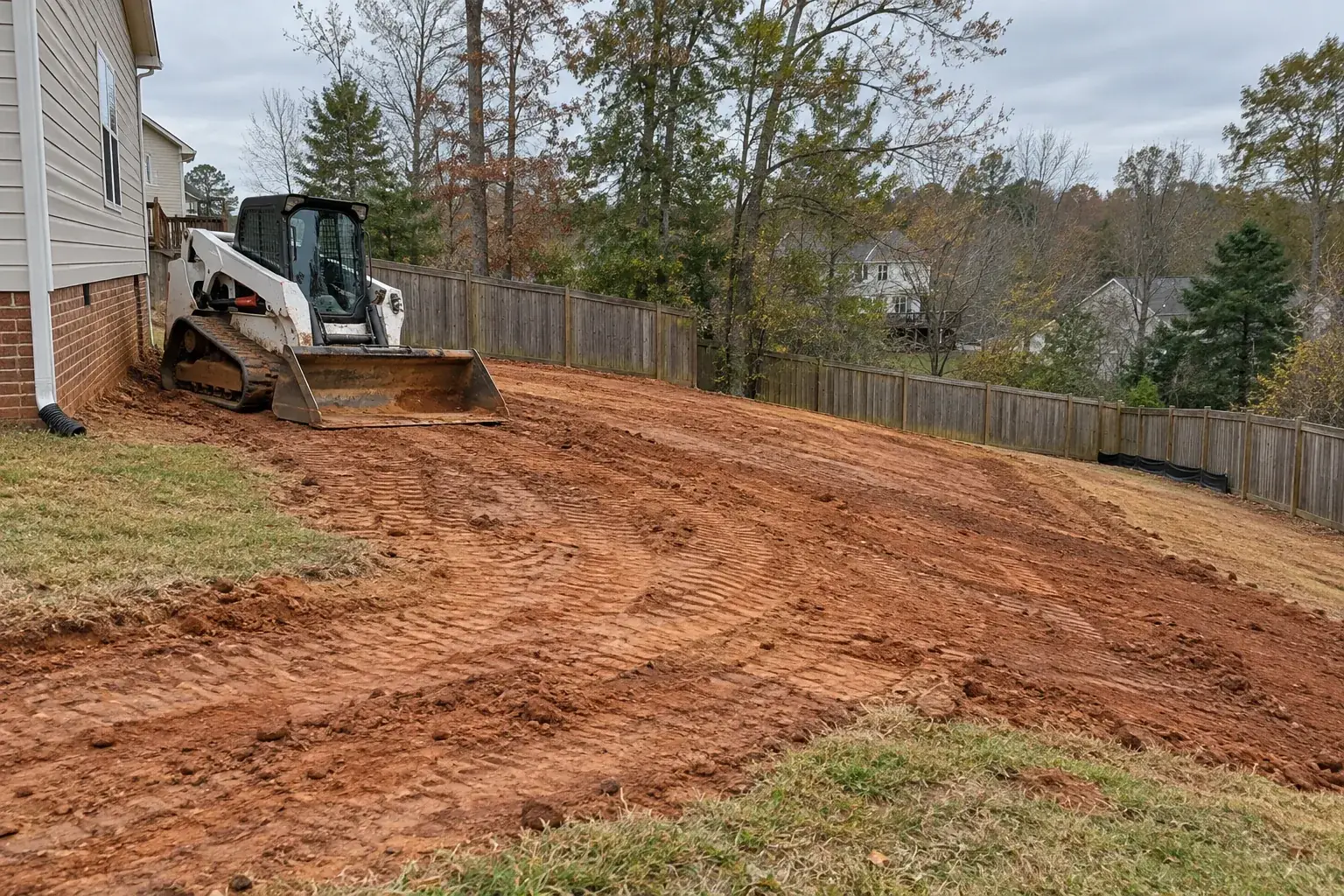
Grading can help when a low area interrupts an otherwise workable surface route, soil has settled beside a structure or runoff moves in the wrong direction across the lawn. It is not simply adding topsoil to a puddle. The new surface must connect to a lower destination, maintain necessary clearances and avoid pushing water toward another vulnerable area.
Measure the whole route
Small elevation differences can determine whether water moves or remains. Measurements should cover the source, the low point, the proposed path and the outlet, not only the visibly wet patch. Patios, driveways, fences, roots and neighboring grades may limit how much soil can be added or removed. Sometimes grading works best with an inlet or pipe at the end.
What affects yard grading cost
The amount of soil moved, disposal or imported material, equipment access, tree roots, hand work, erosion protection and lawn restoration influence the total. A small low-spot correction may begin near the listed starting price; broad reshaping can cost much more. Compare finished elevations and restoration limits, not only equipment hours or cubic yards.
Yard Grading for Drainage in Spartanburg, SC questions
Can I fill a low spot with topsoil?
Only after confirming where the displaced water will move. Filling without a route can transfer the problem.
Will grading damage the lawn?
Areas being reshaped are normally disturbed and need seed, sod or another specified restoration method.
Can grading move water away from a foundation?
It can correct surface slope when elevations allow, often alongside management of roof runoff.
When is a drain needed with grading?
A drain may be added when surface fall is limited or water must cross an obstacle through a controlled route.
Can one drain handle roof and yard water?
Possibly, but combined flow, pipe capacity and outlet conditions need to be designed together.
What should a quote include?
It should identify the collection method, route, outlet, restoration and maintenance access.