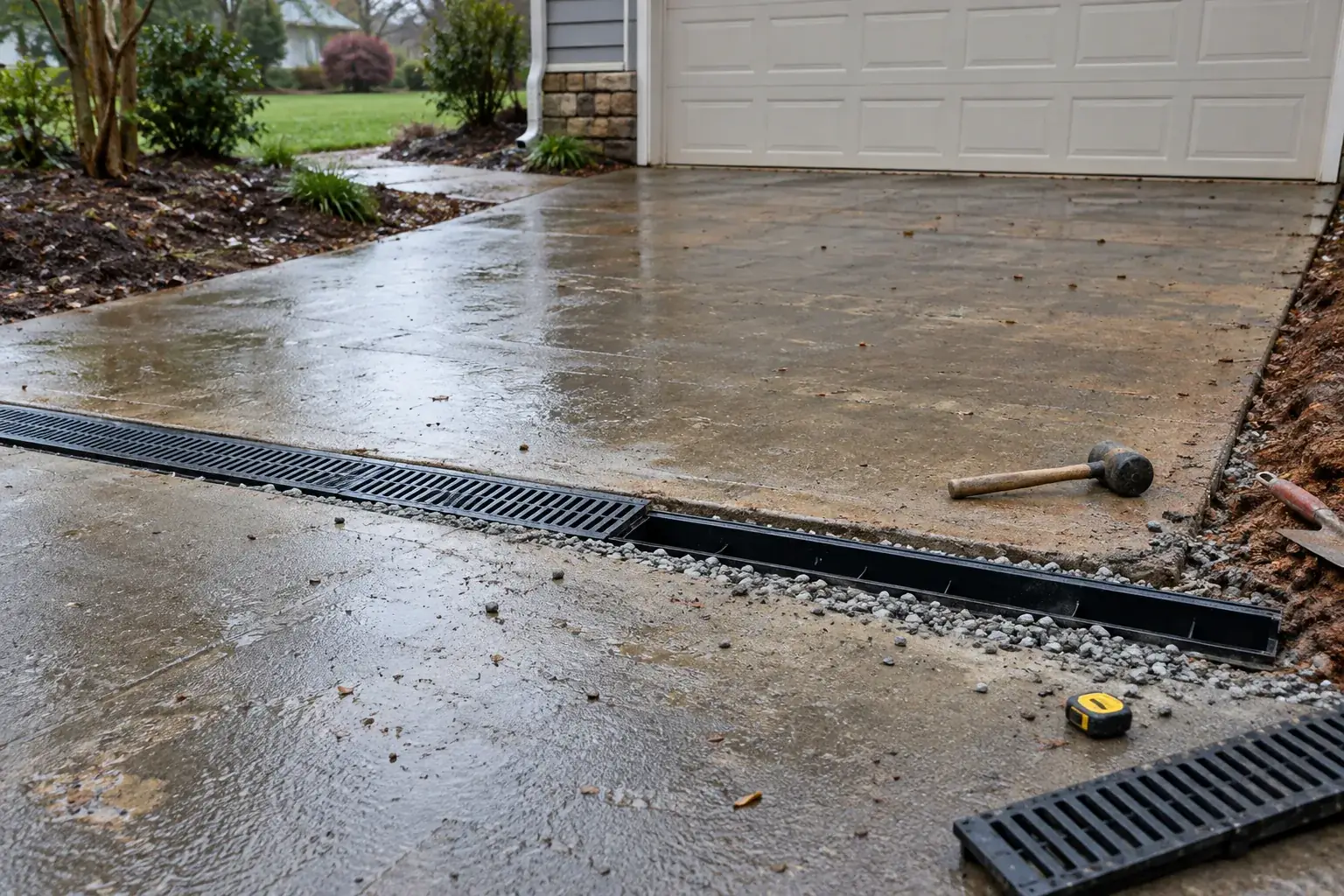
Planning this work at a Simpsonville property
Simpsonville properties often combine concentrated roof runoff with patios, driveways and smaller lawn areas. Follow downspout water during rain and check whether paving directs additional flow toward the same low point or foundation edge.
Measure the approximate wet area and note how long it remains after surrounding turf dries. Include doors, walkways, retaining edges and visible outlets in photographs. These details help separate a roof-water route from a broader yard collection or grading problem.
The Simpsonville scope should list each connected component, its route and the planned discharge location. Restoration can involve sod, mulch, gravel or concrete, so the proposal should define affected surfaces and leave grates, cleanouts and outlets accessible after work is finished.
What to document before requesting a Simpsonville estimate
Simpsonville drainage problems can involve concentrated downspout water, low lawn areas or runoff collecting beside driveways and patios.
For a Simpsonville estimate request, identify which surfaces are affected and how long the water remains after rain ends.
On a Simpsonville property, check how roof water interacts with patios, driveways and small lawn areas. A downspout may look harmless in dry weather but deliver a large amount of water to a confined space during a storm. Follow that flow before selecting a collection system.
Include the approximate wet-area size and the time it takes to dry. Note whether water reaches doors, walkways or the foundation edge. A clear scope should distinguish roof-water piping from yard collection and state how disturbed turf, mulch or paving will be restored after installation. Photograph the route from both directions so the surrounding grade is visible.
Trace water before cutting concrete
A channel drain can intercept water crossing a driveway, but it should not be selected before the upstream source is understood. Runoff may arrive from the street, an uphill lawn, roof discharge or the driveway surface itself. Redirecting some water before it reaches the pavement can reduce the required drain size and simplify the outlet route.
Channel drains and point inlets solve different patterns
A linear channel drain collects water along an edge or across a broad paved path. A catch basin handles flow that gathers at a defined low point. Some driveways need both collection and grade correction. The proposed grate, channel strength and placement should match vehicle loading and sit at an elevation that actually receives the flow.
What affects driveway drainage cost
Driveway systems often start higher than simple lawn drainage because hard-surface work is involved. Channel length, grate load rating, concrete thickness, outlet distance, pipe depth and matching the repaired finish all affect cost. An estimate should state the drain dimensions, outlet route, concrete limits and whether disposal and final cleanup are included.
Driveway Drainage Contractor in Simpsonville, SC questions
Will a channel drain stop water from entering my garage?
It can intercept correctly directed surface flow, but capacity, placement, driveway grade and the outlet all have to work together.
Can a drain be added without replacing the driveway?
Often a narrow section can be cut and restored, depending on the concrete condition and required route.
What kind of grate is used?
The grate should match the location and expected vehicle loading, and it should be removable for cleaning.
Why is my driveway drain overflowing?
Debris, a blocked outlet, poor slope or more incoming water than the system can carry are common causes.
Why does water return to the same spot?
The spot may be the lowest point while the source remains uphill or at a downspout.
Will drainage work disturb the lawn?
Excavation or grading can disturb turf. Restoration should be part of the written scope.