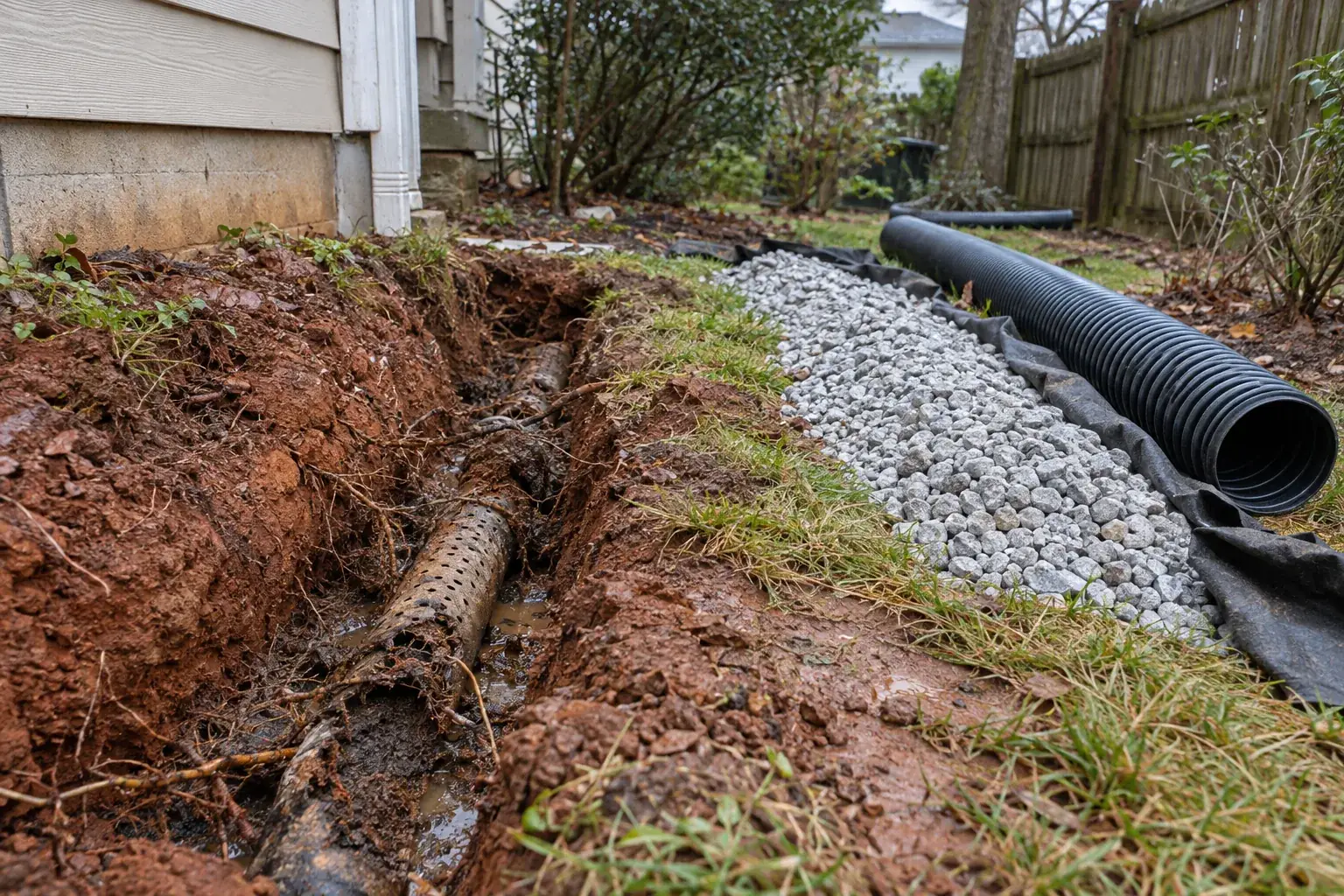
Planning this work at a Simpsonville property
Simpsonville properties often combine concentrated roof runoff with patios, driveways and smaller lawn areas. Follow downspout water during rain and check whether paving directs additional flow toward the same low point or foundation edge.
Measure the approximate wet area and note how long it remains after surrounding turf dries. Include doors, walkways, retaining edges and visible outlets in photographs. These details help separate a roof-water route from a broader yard collection or grading problem.
The Simpsonville scope should list each connected component, its route and the planned discharge location. Restoration can involve sod, mulch, gravel or concrete, so the proposal should define affected surfaces and leave grates, cleanouts and outlets accessible after work is finished.
What to document before requesting a Simpsonville estimate
Simpsonville drainage problems can involve concentrated downspout water, low lawn areas or runoff collecting beside driveways and patios.
For a Simpsonville estimate request, identify which surfaces are affected and how long the water remains after rain ends.
On a Simpsonville property, check how roof water interacts with patios, driveways and small lawn areas. A downspout may look harmless in dry weather but deliver a large amount of water to a confined space during a storm. Follow that flow before selecting a collection system.
Include the approximate wet-area size and the time it takes to dry. Note whether water reaches doors, walkways or the foundation edge. A clear scope should distinguish roof-water piping from yard collection and state how disturbed turf, mulch or paving will be restored after installation. Photograph the route from both directions so the surrounding grade is visible.
Confirm that the drain is actually failing
A wet yard near a French drain does not automatically mean the pipe is blocked. The water may be surface runoff passing over the trench, roof water entering faster than the surrounding soil or a new low point beyond the original route. Locate the drain, inlet features and outlet, then observe whether water reaches the system before opening the ground.
Check the outlet first
An outlet buried by mulch, soil or vegetation can stop the entire route. Pop-up emitters can stick, and exposed pipe can be damaged by mowing or settlement. If the outlet is accessible, inspect it safely during rain and after the storm. No flow may indicate blockage, insufficient fall, a disconnected line or simply that the drain is not intercepting the wet area.
What affects French drain repair cost
Small accessible repairs may begin near the listed amount. Cost rises with locating work, deep excavation, roots, removal of contaminated stone, renewed trench length and restoration. Compare the repair warranty and the diagnosed cause, not only the trench footage. If the original design cannot meet the property conditions, a lower repair price may postpone rather than solve the problem.
French Drain Repair in Simpsonville, SC questions
Can a French drain be cleaned?
Some accessible pipes can be flushed, but sediment packed through the stone and fabric may require excavation.
Why is no water coming from the outlet?
The line may be blocked, damaged, poorly sloped, disconnected or not intercepting water where it enters the soil.
Can only part of the drain be renewed?
Yes, when the failure is localized and the remaining route, stone and outlet are confirmed to be serviceable.
Should roof downspouts connect to a French drain?
Concentrated roof water is usually routed through solid pipe rather than discharged directly into the perforated collection trench.
Why does water return to the same spot?
The spot may be the lowest point while the source remains uphill or at a downspout.
Will drainage work disturb the lawn?
Excavation or grading can disturb turf. Restoration should be part of the written scope.